Types of houses in india
CategoriesUncategorized

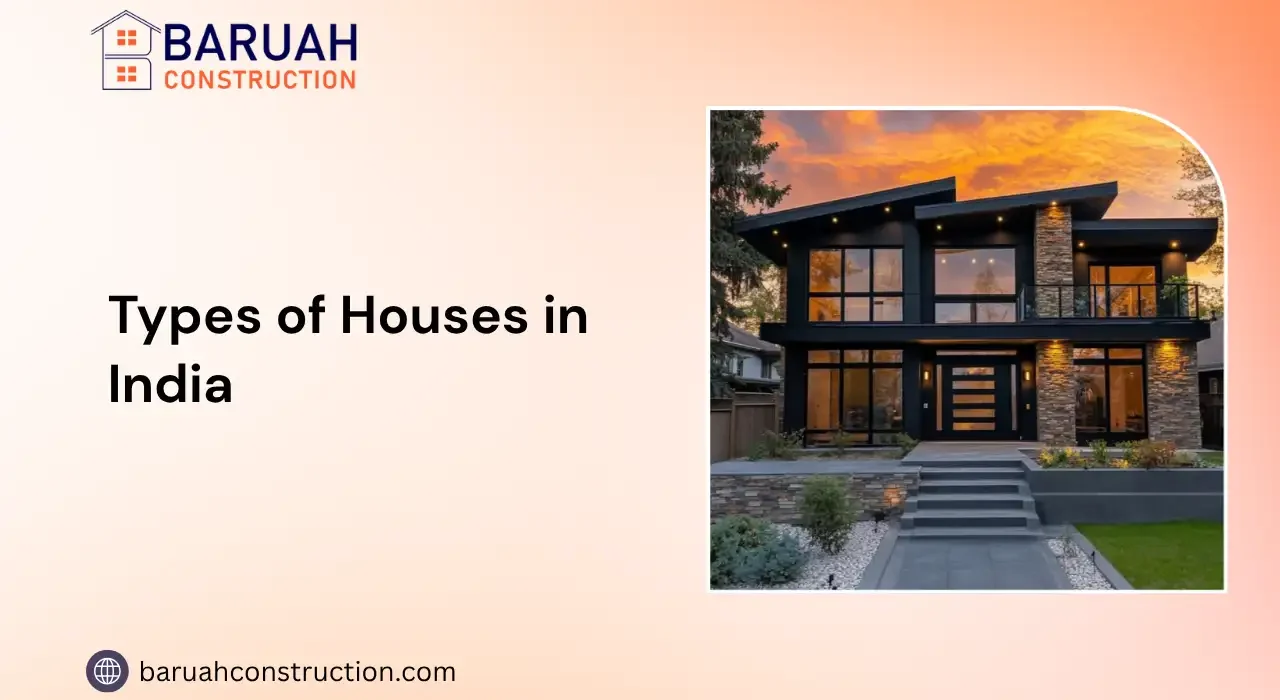
Types of Houses in India: A Complete Guide to Every Home Format

Ask ten people in India what “a house” looks like and you will get ten different pictures — a fourth-floor flat in a gated township, an ancestral home with a courtyard at its centre, a duplex on a 1,200 square foot plot, a stilted bamboo house on the edge of a river. India has one of the most varied housing landscapes anywhere in the world, shaped by climate, geology, income, land availability and centuries of regional building tradition.

For anyone buying, building or simply trying to understand the market, knowing the types of houses in India is genuinely useful groundwork. The format you choose determines your budget, your maintenance burden, how much control you have over the design, how the property appreciates, and how it fits the way your family actually lives. This guide covers every major house type in India — modern and traditional — with plain explanations of what each one is, what it typically costs to own and run, and who it tends to suit best.

How Houses in India Are Classified

Before listing individual formats, it helps to know that Indian housing is classified along three different axes at the same time. Confusion usually comes from mixing them up.

  • By construction material and durability: the kutcha, semi-pucca and pucca classification used by the Census of India and by most government housing schemes. This is about what the walls and roof are made of, not about size or style.
  • By built form and ownership structure: apartments, independent houses, villas, duplexes, row houses, builder floors and so on. This is the classification that matters most when you are actually buying property.
  • By regional and architectural tradition: havelis, nalukettu homes, Chettinad houses, Assam-type houses, bhungas. These are defined by climate response and cultural practice, and several are still built today.

A single home can sit in all three at once. An Assam-type house with a corrugated roof and a brick plinth is a semi-pucca structure by census definition, an independent house by ownership, and a regional vernacular type by tradition.

Types of Houses in India by Construction: Kutcha, Semi-Pucca and Pucca

This is the oldest and most formal classification in Indian housing data, and it still appears in loan paperwork, government scheme eligibility and property surveys.

Type What it means Typical use today
Kutcha house Built entirely from natural or unprocessed materials — mud, thatch, bamboo, unburnt brick, leaves. Walls and roof both temporary in nature. Rural and low-income housing; increasingly replaced under government housing schemes. Rarely mortgageable.
Semi-pucca house A mix — typically permanent walls (brick, concrete) with a temporary or lightweight roof such as thatch, tin or corrugated sheet, or vice versa. Very common in small towns and semi-urban India, including much of Assam’s traditional housing stock.
Pucca house Both walls and roof built from permanent materials — burnt brick, stone, cement concrete, RCC, timber with proper treatment. The standard for all formal urban development, all apartment construction and all bank-financed property.


For practical purposes: if you are buying property through a bank loan in an Indian city, you are buying a pucca house. The distinction matters most when evaluating older resale properties, rural land with existing structures, or when assessing eligibility for schemes such as the Pradhan Mantri Awas Yojana.

Modern Types of Houses in India

These are the formats you will actually encounter when searching for property in an Indian city. Here they are in brief, with detail on each below:

  • Apartment or flat
  • Independent house
  • Villa
  • Duplex house
  • Bungalow
  • Row house
  • Penthouse
  • Studio apartment
  • Builder floor
  • Farmhouse

1. Apartment or Flat

The default urban home in India. An apartment is one self-contained unit within a multi-storey building, where you own your unit outright and hold an undivided share of the land and common areas alongside every other owner. Sizes run from compact 1 BHK units to sprawling 4 BHK layouts, and buildings range from four-storey walk-ups to high-rise towers with lifts, parking, security and shared amenities.

Apartments dominate Indian cities for a simple reason: they use scarce urban land efficiently, which keeps the entry price far below what a comparable independent house on its own plot would cost. You also get shared infrastructure — a lift, a generator, security staff, a water treatment system — that would be prohibitively expensive to provide for a single household.

Best suited to: first-time buyers, working couples, nuclear families, and anyone who values security and low personal maintenance over structural control. Trade-off: you cannot alter the structure, you pay monthly maintenance to a society or association, and decisions about the building are taken collectively.

2. Independent House

An independent house is a standalone structure on its own plot of land, owned entirely by one household — walls, roof, land and all. It may be a single storey or several, and can be built to whatever design the owner wants within local building bye-laws. In Indian property listings the term covers everything from a modest two-bedroom home on a 1,000 square foot plot to a substantial multi-generational family house.

The defining advantage is control. You decide the layout, you can extend vertically later as the family grows, you can add a rental floor, and the land itself — which is the appreciating part of any property — is yours alone. The defining disadvantage is that everything is your responsibility: security, water supply, repairs, terrace waterproofing and the entire construction process if you build from scratch.

Best suited to: joint families, buyers planning to build in phases, and those who want land ownership rather than an undivided share. Trade-off: a much higher entry cost for the same built-up area, and full personal responsibility for upkeep and safety.

3. Villa

A villa is a premium independent house, usually built within a planned gated community that provides shared amenities — a clubhouse, landscaped gardens, a pool, perimeter security, sometimes a school or retail block. Villas are typically two to three storeys, come with private open space such as a garden or terrace, and are sold either as complete constructed units or as a plot with an approved design package.

The appeal of a villa is that it combines the privacy and land ownership of an independent house with the managed services and community of an apartment complex. You get a private front door and a garden, but you are not personally arranging a security guard or a water tanker.

Best suited to: established families and higher-budget buyers who want space and privacy without giving up managed amenities. Trade-off: villas are usually on the outskirts where land is available, so commute times can be longer, and maintenance charges are higher than apartment equivalents.

4. Duplex House

A duplex is a single residence spread across two connected floors, joined by an internal staircase. Crucially, it is one home, not two — the family lives across both levels, typically with living, dining and kitchen areas on the lower floor and bedrooms on the upper. Duplexes exist both as standalone houses on a plot and as two-level units inside an apartment building.

The format is popular in India because it delivers a clear separation between the social and private zones of a home without needing a large footprint. The same total area feels considerably more spacious across two floors than on one, and it suits joint families who want some generational separation under one roof.

Best suited to: growing families, joint families and buyers on narrower urban plots who want volume without sprawl. Trade-off: stairs become a real consideration for elderly residents, and construction cost per square foot is generally higher than a single-storey build.

5. Bungalow

In Indian usage a bungalow is a low-rise independent house, traditionally single-storeyed, set on a generous plot with open space around it and often a verandah at the front. The word entered English from the Bengali “bangla”, describing a low house with a wide sloping roof, and the colonial-era bungalow remains a recognisable form in cantonment areas and older city neighbourhoods across the country.

Modern listings often use “bungalow” loosely for any large independent house, sometimes with an upper floor. The distinguishing characteristic is horizontal spread and surrounding land rather than height. Because they consume so much land, genuine bungalows in city centres are now rare and expensive, and many older ones are redeveloped into apartment buildings.

Best suited to: buyers prioritising ground-level living, older residents who want to avoid stairs, and those with land available. Trade-off: the highest land cost per unit of living space of any format.

6. Row House

Row houses are individual homes built side by side in a continuous line, sharing side walls with their neighbours but each having its own entrance, its own plot footprint and often a small front or rear yard. They are usually two or three storeys and are developed as a planned set within a larger project.

Row houses occupy a genuine middle ground in Indian housing. You get vertical living, a private entrance and independent ownership of your unit and its land, at a price meaningfully below a detached villa — because the shared walls let the developer fit far more homes onto the same land. The compromise is on privacy and light: with two shared walls, natural light generally comes only from the front and back.

Best suited to: buyers who want an independent home format at a mid-range budget. Trade-off: reduced cross-ventilation and less sound isolation than a detached house.

7. Penthouse

A penthouse is the top-floor apartment in a residential building, usually larger than the units below it, and typically paired with a private terrace, better views and a higher specification of finishes. In many Indian projects a penthouse is a duplex, occupying the top two floors with an internal staircase.

Penthouses are positioned as the flagship unit of a project and priced accordingly — usually a substantial premium per square foot over standard units in the same tower. What buyers are paying for is exclusivity, uninterrupted views, private outdoor space in a dense city, and a degree of privacy that lower floors cannot offer.

Best suited to: premium buyers who want apartment convenience with private outdoor space. Trade-off: greater exposure to heat and rain, higher price per square foot, and total dependence on lifts.

8. Studio Apartment

A studio apartment is a compact single-room unit where the living, sleeping and cooking areas share one open space, with only the bathroom separately enclosed. Indian studios typically run between roughly 300 and 600 square feet.

Studios have grown steadily in Indian cities as young professionals, students and single-person households look for a foothold in expensive locations. Because the unit is small, a studio can put you in a central, well-connected neighbourhood at a price that a 2 BHK in the same building never would. They also perform reliably as rental investments near business districts, colleges and hospitals.

Best suited to: single professionals, students, and investors buying for rental yield. Trade-off: unsuitable for families, limited storage, and a resale market narrower than conventional apartments.

9. Builder Floor

A builder floor is one complete floor of a low-rise building, sold as an independent unit. A four-storey building might contain four builder floors, each owned by a different household, each occupying an entire level. Unlike an apartment, there is usually only one home per floor, which means no shared corridors, no neighbours on your level and considerably more privacy.

Builder floors are especially common in Delhi NCR and are increasingly seen in other cities as land is redeveloped. They offer something close to independent-house privacy at apartment-scale pricing. What they usually lack is the amenity package — a small building rarely supports a clubhouse, gym or full-time security, and there may be no lift in older three- and four-storey structures.

Best suited to: families wanting privacy and space without the cost of a full independent house. Trade-off: few or no shared amenities, and building maintenance depends on informal cooperation between a handful of owners.

10. Farmhouse

A farmhouse is a residence built on agricultural or peri-urban land, typically on a much larger plot than any city property, with substantial open ground around it. In Indian practice, farmhouses on the fringes of major cities function largely as weekend or second homes rather than as working farms.

This is the one format on this list where legal diligence matters more than design. Agricultural land is subject to state-specific restrictions on who may purchase it and what may be built on it, and conversion of land use is a formal process. Bank financing is also harder to obtain for farmhouse properties than for standard residential ones.

Best suited to: buyers looking for a second home, space and privacy well outside the city. Trade-off: complex land-use and title issues, limited financing, and distance from schools, hospitals and workplaces. Legal verification is essential.

Comparing the Main Types of Houses in India

House type What you own Relative cost Best for
Apartment Your unit + undivided share of land Low to mid First-time buyers, nuclear families
Builder floor One full floor + share of land Mid Families wanting privacy, fewer amenities
Row house Unit + its own footprint, shared side walls Mid Mid-budget buyers wanting an independent format
Duplex Two-level residence (plot or in-building) Mid to high Growing and joint families
Villa Whole house + private plot in a gated project High Space and privacy with managed amenities
Independent house Entire structure + entire plot High Joint families, phased self-building
Bungalow Low-rise house + generous surrounding land High Ground-level living, no stairs
Penthouse Top-floor unit + private terrace High Premium buyers wanting outdoor space
Studio apartment Compact single-room unit Entry level Singles, students, rental investors
Farmhouse Structure on large peri-urban plot Varies widely Second homes; needs legal diligence


Cost bands above are relative comparisons within the same city and locality, not absolute figures — a mid-band row house in one city can cost more than a high-band villa in another. Always compare formats within the same micro-market.

Traditional Types of Houses in India

India’s vernacular architecture developed as a direct response to local climate, available materials and social structure — and long before mechanical cooling, these buildings solved problems that modern construction often solves less elegantly. Several of these types are still built and lived in today.

Haveli

Found across Rajasthan, Gujarat, Punjab and parts of north India, the haveli is a large courtyard mansion built around one or more open central courtyards. The courtyard drives natural ventilation, provides shaded outdoor space in an extreme climate, and gave the household — particularly the women of the family — a private open area. Thick masonry walls, jharokhas (projecting enclosed balconies) and intricately carved stone or wood screens are its recognisable features.

Nalukettu and Ettukettu

The traditional homes of Kerala, built in timber and laterite with steeply pitched tiled roofs designed to shed very heavy monsoon rain. A nalukettu is organised around a single central open courtyard (the nadumuttam) enclosed by four blocks; an ettukettu is the larger eight-block version with two courtyards. Deep overhanging eaves and raised plinths handle the rain, while the courtyard handles the heat.

Chettinad House

The mansions of the Chettiar community in Tamil Nadu, built through the 19th and early 20th centuries with extraordinary craftsmanship and imported materials — Burmese teak, Italian marble, Belgian glass — arranged around a sequence of courtyards and long pillared halls designed to host very large family gatherings.

Assam-Type House

The defining vernacular house of Assam and much of Northeast India: a single-storey structure with a timber or bamboo frame, an ikra reed and plaster or brick infill wall, and a sloping corrugated metal roof over a wide verandah. The lightweight frame construction is not a compromise — it is a highly effective seismic response, and Assam-type houses have historically performed well in the region’s frequent earthquakes precisely because they flex rather than crack. The steep roof and raised plinth handle the region’s intense monsoon.

Stilt Houses (Chang Ghar)

Built by communities across the Brahmaputra valley and the hills of the Northeast, these bamboo and timber houses are raised on posts above the ground. The elevation protects against seasonal flooding and damp, allows air to circulate beneath the floor, and keeps livestock and storage in the sheltered space below. Mishing chang ghars along the Brahmaputra are among the best-known examples.

Bhunga

The circular mud-and-thatch houses of the Kutch region in Gujarat. Their cylindrical form has no flat face for wind to push against, which makes them remarkably resistant to both desert storms and earthquakes — a fact that drew serious engineering attention after the 2001 Bhuj earthquake, when bhungas survived where rectangular masonry buildings did not.

Types of Houses in Guwahati and Northeast India

Housing in Guwahati reflects a specific set of regional conditions, and buyers here are choosing between formats under constraints that do not apply in most other Indian cities.

The shift from Assam-type to RCC. Much of Guwahati’s older housing stock consists of Assam-type independent houses on individual plots. As land values in the city have risen and available plots have become scarcer, development has moved decisively towards multi-storey RCC apartment buildings, which is now the dominant format for new residential supply across the city.

Seismic Zone V. Guwahati lies in Seismic Zone V, India’s highest earthquake-risk category. This is the single most important technical consideration in any house-buying decision here, and it applies to every format. Reinforced concrete frames with properly detailed ductile reinforcement, adherence to the relevant Bureau of Indian Standards codes for earthquake-resistant design, and competent structural supervision are non-negotiable — not premium features.

Terrain and drainage. The city’s hillocks and low-lying areas create very different building conditions within short distances. Hillside plots require attention to slope stability, retaining structures and drainage; low-lying areas require attention to plinth height and monsoon water management. Soil conditions across much of the Brahmaputra valley are alluvial and require site-specific foundation design rather than a standard approach.

What buyers are choosing. Apartments dominate new supply in and around areas such as Beltola, Six Mile, Hatigaon and Zoo Road. Independent houses and duplexes remain common on the city’s outskirts where plots are still available, and row house and villa projects are a growing mid-to-premium segment.

Find the Right Type of Home in Guwahati

Choosing between an apartment, a duplex and an independent house is easier when you can walk through real layouts rather than compare them on paper. Baruah Construction has been building residential and commercial properties in Guwahati since 1993, founded by the late civil engineer Anil Baran Barua, with a focus on sound structural engineering suited to the region’s seismic and monsoon conditions — the part of a home you cannot inspect after handover.

If you are weighing up formats and want to see how each one actually lives, get in touch with our team to walk through our current projects and floor plans, or schedule a site visit to see the layouts, orientation and construction quality for yourself.

Frequently Asked Questions About Types of Houses in India

How many types of houses are there in India?

There is no fixed number, because Indian houses are classified in several ways at once. By construction there are three official categories — kutcha, semi-pucca and pucca. By built form, the main modern types are apartments, independent houses, villas, duplexes, bungalows, row houses, penthouses, studio apartments, builder floors and farmhouses. Regional traditional types add many more.

Which type of house is best in India?

It depends entirely on budget, family size and location. Apartments suit first-time buyers and nuclear families in cities because they cost less and require little personal maintenance. Independent houses and villas suit larger families who want land ownership and control. There is no single best format — only the best fit for a given household.

What is the difference between a villa and a bungalow?

A bungalow is defined by its form: a low-rise, usually single-storey independent house spread horizontally over a generous plot. A villa is defined by its setting: a premium independent house, typically two or three storeys, built inside a planned gated community with shared amenities such as security, a clubhouse and landscaping.

What is a duplex house?

A duplex is one home spread across two connected floors joined by an internal staircase — not two separate units. Living, dining and kitchen areas usually occupy the lower floor with bedrooms above, giving a clear separation between social and private zones. Duplexes exist both as standalone houses and as two-level units inside apartment buildings.

What is the difference between a kutcha and a pucca house?

A kutcha house is built from natural or unprocessed materials such as mud, bamboo and thatch, with both walls and roof temporary in nature. A pucca house uses permanent materials — burnt brick, stone, cement concrete or RCC — for both walls and roof. A semi-pucca house combines permanent walls with a temporary roof, or the reverse.

What is an Assam-type house?

An Assam-type house is the traditional single-storey home of Assam and much of Northeast India, built with a timber or bamboo frame, ikra reed or brick infill walls, a sloping corrugated metal roof and a wide verandah. Its lightweight, flexible frame is an effective response to the region’s frequent seismic activity, and the steep roof handles heavy monsoon rain.

Is a flat or an independent house better in India?

A flat costs less for the same built-up area, includes shared amenities and security, and requires little personal maintenance, but you cannot alter the structure and you own only an undivided share of the land. An independent house gives full control and outright land ownership, but costs considerably more and places all maintenance and security responsibility on you.

What is a builder floor?

A builder floor is one entire floor of a low-rise building, sold and owned as an independent unit. With typically one home per floor, there are no shared corridors and no neighbours on your level, offering more privacy than a standard apartment. The trade-off is that small buildings rarely provide amenities such as a clubhouse, gym or full-time security.

Which type of house is most common in Guwahati?

Guwahati’s older housing stock is largely Assam-type independent houses on individual plots, but multi-storey RCC apartments now dominate new residential supply as urban land has become scarcer. Independent houses, duplexes and row houses remain common towards the city outskirts where plots are still available.

Types of Mortgage in India
CategoriesReal estate

Types of Mortgage in India: A Complete Guide for Home Buyers

If you have ever sat across a bank officer and heard the words “equitable mortgage” or “registered mortgage” and simply nodded along, you are in very good company. Most home buyers in India sign mortgage papers without ever being told what kind of mortgage they are creating — or what it means for their property if things go wrong.

A mortgage is not the same thing as a home loan, and the difference is not academic. The loan is the money you borrow. The mortgage is the legal security you give the lender over your property so that they can recover that money if you default. Which of the six statutory forms that security takes decides who holds your title deeds, whether the arrangement appears in public land records, what it costs you to create, and how quickly a lender can move against your home if repayments stop.

This guide walks through all six types of mortgage in India, explains which ones you will realistically encounter as a home buyer, compares the loan products built on top of them, and covers what to check before you sign — with specific notes for buyers purchasing property in Guwahati and across Assam.

What Is a Mortgage? 

Mortgages in India are governed by the Transfer of Property Act, 1882. Section 58(a) defines a mortgage as the transfer of an interest in specific immovable property for the purpose of securing the payment of money advanced or to be advanced by way of loan, an existing or future debt, or the performance of an engagement which may give rise to a pecuniary liability.

Three phrases in that definition do most of the work:

  • “Transfer of an interest” — not the property itself. You remain the owner. The lender acquires a defined legal interest in it, limited to the purpose of securing the debt.
  • “Specific immovable property” — the property must be clearly identified. A vague or general charge over “all my assets” is not a mortgage.
  • “Securing payment” — the interest exists only for security. Once the debt is cleared, the lender is obliged to release it, and you are entitled to have your title restored clean.

The statute also gives you the vocabulary lenders use: the borrower is the mortgagor, the lender is the mortgagee, the amount secured is the mortgage-money, and the instrument recording it all is the mortgage-deed.

One more provision matters practically. Section 59 requires that every mortgage other than a mortgage by deposit of title deeds, where the principal money secured is one hundred rupees or more, must be created by a registered instrument signed by the mortgagor and attested by at least two witnesses. That single carve-out for deposit of title deeds is the reason the equitable mortgage became the default for retail home loans in India — more on that shortly.

Mortgage vs Home Loan: Clearing the Confusion First

In everyday Indian usage — and in a lot of online content — “mortgage” is used loosely to mean “loan against property”. That is imprecise, and it causes real confusion when buyers compare products.

Home Loan Mortgage
What it is A credit facility — the money advanced to you A security interest — the legal charge over your property
Purpose To buy, build or renovate a specific property To protect the lender’s ability to recover the debt
End use Restricted to the stated property purpose Not applicable — it secures whatever debt it is attached to
Relationship Almost always secured by a mortgage Can secure a home loan, a business loan, or any other debt

So when a lender says your home loan is “mortgage-backed”, they mean that one of the six statutory forms below has been created over your property in their favour.

The 6 Types of Mortgage in India Under Section 58

Section 58 of the Transfer of Property Act sets out six distinct forms. They differ on three axes that matter to you as a borrower: whether possession of the property changes hands, whether the arrangement must be registered, and what the lender can actually do if you default.

Type of Mortgage Possession Registration Lender’s Main Remedy on Default
Simple mortgage Stays with borrower Compulsory Sale of the property through a court decree
Mortgage by conditional sale Usually with borrower Compulsory Foreclosure — the ostensible sale becomes absolute
Usufructuary mortgage Passes to lender Compulsory Retains possession, rents and profits until debt is cleared
English mortgage Often passes to lender Compulsory Sale — wider power of sale than a simple mortgage
Deposit of title deeds (equitable) Stays with borrower Generally not compulsory Sale, broadly as in a simple mortgage
Anomalous mortgage Depends on the deed Compulsory Whatever the deed and local custom provide

1. Simple Mortgage

In a simple mortgage, you keep possession of your property. You bind yourself personally to repay the loan, and you agree — expressly or by implication — that if you fail to pay, the lender may have the property sold and the proceeds applied to the debt.

The defining feature is that the lender cannot simply take your property. They must obtain a decree from a court directing its sale. That makes a simple mortgage relatively borrower-protective but slow and expensive to enforce, which is precisely why banks avoid it for retail lending. It must be registered, and stamp duty applies at rates set by the state.

  • Best understood as: a personal promise to repay, plus a court-enforceable right of sale.
  • Common in private lending and older family transactions rather than institutional home finance.

2. Mortgage by Conditional Sale

Here the borrower ostensibly sells the property to the lender, subject to a condition written into the same document — typically that the sale becomes absolute if the money is not repaid by a fixed date, or that the sale becomes void, or the property is transferred back, once repayment is made.

The statutory proviso is important and frequently litigated: the transaction is not treated as a mortgage at all unless the condition is embodied in the very document that effects the sale. If the condition sits in a separate side agreement, courts have generally read the arrangement as a genuine sale, not a mortgage — with obvious consequences for the seller.

The lender’s remedy here is foreclosure: on default, they ask a court to extinguish your right to redeem, and the ostensible sale hardens into a real one. For a home buyer, the practical takeaway is caution. If anyone proposes a “sale with a buy-back option” as a financing structure, have a property lawyer read the document before you sign it.

3. Usufructuary Mortgage

In a usufructuary mortgage, you hand over possession of the property to the lender. The lender is authorised to keep possession and to take the rents and profits from it — in place of interest, or towards the principal, or partly each — until the debt is discharged.

Two features make this form unusual. There is no personal covenant to repay, so the lender cannot sue you personally for the money. And the lender can neither foreclose nor force a sale; their security is the income stream from the property itself. It is most often seen with agricultural land and income-generating rural property, and essentially never with an urban home loan — no bank wants to occupy and manage your flat.

4. English Mortgage

An English mortgage has three elements: you bind yourself to repay the mortgage-money on a specified date; you transfer the property absolutely to the lender; and the transfer is subject to a proviso that the lender will re-transfer the property to you once you have paid.
It sounds severe — an absolute transfer — but your right of redemption survives, and the transfer is defeasible on repayment. The advantage for lenders is a broader power of sale on default than a simple mortgage allows. In India it appears mainly in commercial and corporate lending, and in transactions involving public financial institutions, rather than in retail housing finance.

5. Mortgage by Deposit of Title Deeds (Equitable Mortgage)

This is the one that will almost certainly apply to your home loan.

It is created when a borrower delivers documents of title to immovable property to a creditor or their agent, with the intention of creating a security over that property. No elaborate deed is required. The delivery of the title documents, coupled with the intention to secure the debt, is itself the mortgage — which is why it is also called an equitable mortgage or, in banking shorthand, a memorandum of deposit of title deeds.

There is an important geographical limitation. Under Section 58(f), this form can only be created in specified towns — originally Calcutta, Madras and Bombay, and thereafter any town notified by the concerned State Government in the Official Gazette. Most major cities have been notified over the years, but the list is state-specific and has expanded at different times in different states.

  • Check before you assume: Ask your lender to confirm that the property’s location falls within a notified town for the purpose of Section 58(f). If it does not, the mortgage will have to be created as a registered mortgage instead, which changes both the timeline and the cost of your transaction.
  • Registration is not always optional in practice: Several states now require a memorandum of deposit of title deeds to be registered or stamped under state law, independently of the Transfer of Property Act. Your lender or lawyer will know the current position in your state.

6. Anomalous Mortgage

Section 58(g) is a residual category. Any mortgage that is not one of the five forms above is an anomalous mortgage — typically a hybrid that borrows features from more than one type, or a form arising from local custom or a specially negotiated commercial arrangement.

Because there is no statutory template, the rights of both parties are governed entirely by the terms of the deed and any applicable local usage. If you are ever presented with a mortgage that does not clearly fit one of the standard categories, that is a strong signal to have it independently reviewed rather than relying on the lender’s description of it.

Which Types Are Actually Used for Home Loans in India?

For a salaried buyer purchasing a flat, the realistic choice is between two forms: the equitable mortgage and the registered mortgage. Everything else is either historical, agricultural or commercial.

Equitable Mortgage Registered Mortgage
How it is created Deposit of original title deeds with intent to secure Registered mortgage deed executed before the Sub-Registrar
Cost to create Lower — no registration fee in most cases Higher — stamp duty and registration charges apply
Speed Fast, often same-day Slower — depends on Sub-Registrar appointment and processing
Public record Not recorded in land records Recorded — visible to anyone searching the property
Where available Only in notified towns Anywhere
Typical use Standard bank and housing-finance home loans Second charges, properties outside notified towns, some NBFC lending

A registered mortgage offers the lender the strongest and most publicly visible security, which is why it is often insisted upon for a second charge or where the borrower profile carries more risk. The trade-off is cost: because it must be registered, stamp duty and registration charges are payable at rates set by the state government, and these are revised periodically. Confirm current rates with the office of the Inspector General of Registration in your state before budgeting for them.

How Lenders Enforce a Mortgage

Understanding enforcement is not pessimism — it is how you assess what you are agreeing to. Banks, housing finance companies and notified NBFCs can enforce a security interest under the SARFAESI Act, 2002 without going to court, once a loan has been classified as a non-performing asset. The process begins with a formal demand notice giving the borrower a statutory period to regularise the account; only if that period passes can the lender move to take possession of, or sell, the secured asset.

  • Cooperative lenders and private individuals who are not covered by SARFAESI must generally go through the courts, which takes considerably longer.
  • Agricultural land is excluded from SARFAESI enforcement.
  • Borrowers have a statutory right to appeal to the Debts Recovery Tribunal, and the right to redeem the property by clearing dues before the sale is completed.

Planning to Buy a Home in Guwahati?

Understanding how mortgages work is only half the preparation. The other half is choosing a property whose documentation stands up to a lender’s legal scrutiny — because a clean title chain, approved plans and completed mutation are what turn a sanction letter into an actual disbursement.

Baruah Construction has been building homes in Guwahati since 1993. Our residential projects — from 1 BHK and 2 BHK apartments through to spacious 3 BHK and 4 BHK homes, along with villas and commercial spaces — are developed with the documentation and approvals buyers and their lenders need.

Frequently Asked Questions

How many types of mortgage are there in India?

There are six types of mortgage in India, all defined under Section 58 of the Transfer of Property Act, 1882: simple mortgage, mortgage by conditional sale, usufructuary mortgage, English mortgage, mortgage by deposit of title deeds (equitable mortgage), and anomalous mortgage.

What is the difference between a mortgage and a home loan?

A home loan is the money a lender advances to you. A mortgage is the legal security interest you create over your property so the lender can recover that money if you default. Nearly every home loan in India is backed by a mortgage, but a mortgage can also secure loans taken for other purposes.

Which type of mortgage is most common for home loans in India?

The mortgage by deposit of title deeds, commonly called an equitable mortgage, is by far the most common. Because it is exempt from compulsory registration under the Transfer of Property Act, it is faster and cheaper to create than a registered mortgage, while still being legally enforceable.

What is the difference between an equitable mortgage and a registered mortgage?

An equitable mortgage is created by depositing original title deeds with the lender and generally requires no registration, so it is quicker and less expensive. A registered mortgage is created through a deed executed and registered before the Sub-Registrar, attracts stamp duty and registration charges, and appears in the public land records.

Is a mortgage deed compulsorily registrable in India?

Under Section 59 of the Transfer of Property Act, a mortgage securing one hundred rupees or more must be created by a registered instrument attested by at least two witnesses — with the single exception of a mortgage by deposit of title deeds. Some states additionally require the memorandum recording such a deposit to be stamped or registered under state law, so check the current position locally.

What is a reverse mortgage and who can apply for one?

A reverse mortgage lets a senior citizen receive periodic payments from a lender against a self-occupied home, while continuing to own and live in it. It is generally available from age 60, and the loan is usually settled after the borrower’s death or permanent relocation, most often from the sale of the property, with legal heirs typically given the first opportunity to repay and retain it.

What happens to my mortgage when I finish repaying the loan?

The lender must release the security. Collect all original title documents, obtain a no-dues or loan closure certificate, and ensure the charge is formally released — including removal from the land records where the mortgage was registered. Verify this at the time of closure rather than discovering an unreleased charge years later during a resale.


Vastu for Home in India
CategoriesReal estate tips & tricks

Vastu for Home in India: A Complete Room-by-Room Guide

For most Indian families, a home is more than four walls — it’s meant to bring peace, health and prosperity. That’s why, whether you’re booking a new apartment, building a villa, or simply rearranging your living room, vastu for home in India remains one of the most searched topics among homebuyers. Vastu Shastra, the traditional Indian science of space and architecture, offers direction-based guidelines for laying out every room so your home works in harmony with natural energy, light and airflow.

This guide breaks down vastu room by room — from the main door to the pooja room — explains the principles behind it, covers practical tips for apartments where you can’t change the structure, and lists simple remedies if your home doesn’t perfectly match the ideal layout.

What Is Vastu Shastra and Vastu for Home in India

Vastu Shastra is an ancient Indian architectural tradition built around the idea that a home should be in balance with the five natural elements — earth (Prithvi), water (Jal), fire (Agni), air (Vayu) and space (Akash). Each element is associated with a direction, and each room in a home is believed to function best when it’s aligned with the element it relates to most. A kitchen, for instance, is linked to fire, so it’s traditionally placed in the south-east; a bathroom is linked to water, so it favours the north-west.

Beyond tradition, many of these principles also make practical sense — an east-facing kitchen catches the morning sun, a north-east living area stays naturally bright, and keeping the centre of the home open improves airflow. That combination of cultural belief and everyday livability is why vastu continues to influence home-buying decisions across India, from independent houses to high-rise apartments.

Vastu for Home: Room-by-Room Direction Guide

Here’s a quick-reference table for the ideal direction of each room, followed by a closer look at what to keep in mind for each one.

Room / Area Ideal Direction Quick Tip
Main door / entrance North, East or North-East Keep it well-lit, clutter-free; avoid shoe racks or bins directly facing it
Living room North or East Place heavy furniture along south/west walls; keep north-east open
Master bedroom South-West Sleep with head towards south or east; avoid a mirror facing the bed
Kitchen South-East Cook facing east; keep the stove and sink apart
Pooja / worship room North-East Face east or north while praying; keep the corner light and airy
Bathroom / toilet North-West or West Avoid north-east; keep doors closed and fix leaks promptly
Staircase South or South-West Build clockwise with an odd number of steps; avoid the centre of the home
Study / home office North or East facing seat Sit facing north or east; avoid working under a beam

Main Door and Entrance

The main door is considered the entry point for energy into the home, so North, East and North-East facing entrances are preferred. Keep the entrance well-lit and clutter-free, avoid placing shoe racks or dustbins directly in front of the door, and consider a nameplate or a small plant to the side for a welcoming first impression.

Living Room

A living room in the North or East works well, since these directions get good morning light. Place heavier furniture like sofas and cabinets along the south or west walls, keep the north-east corner relatively open, and favour calming colours such as cream, beige or light green.

Master Bedroom

The South-West is considered the ideal direction for the master bedroom, as it’s associated with stability. While sleeping, the head is traditionally kept towards the south or east (not north), and a mirror facing the bed is generally avoided. Soft, calming colours like pastel blue or peach are commonly recommended.

Kitchen

The South-East, linked to the fire element, is the preferred direction for a kitchen, with the cook facing east while at the stove. The sink and stove are ideally kept apart, since water and fire elements are traditionally not placed too close together.

Pooja Room

The North-East corner is considered best for a pooja or worship space, since it’s regarded as the most spiritually significant part of the home. Idols or the altar are usually placed against the north or east wall, with worshippers facing east or north while praying.

Bathroom

North-West or West facing bathrooms are preferred, while the North-East and the centre of the home are best avoided for toilets. Good ventilation, closed doors when not in use, and prompt repair of leaks are simple habits that support both vastu and everyday hygiene.

Staircase

A staircase in the South or South-West, built in a clockwise direction with an odd number of steps, is considered ideal. Staircases at the centre of the home are generally avoided, as the centre (Brahmasthan) is meant to stay open.

Study or Home Office

For a study or work-from-home setup, sitting facing North or East is considered favourable for focus and clarity. Keeping the desk clutter-free and avoiding a seat directly under an exposed beam are commonly suggested adjustments.

Vastu Tips for Apartments and Flats in India

Most homebuyers today are choosing apartments, where the building’s structure, entrance and room layout are already fixed. The good news is that full-plot vastu isn’t the only option — there’s a lot you can still do within a flat:

  • Check overall unit orientation before booking: Ask the developer which direction the main door and balcony face — this is easiest to evaluate before you buy, not after.
  • Use interior placement as your main lever: Even if the kitchen or bedroom isn’t in the ‘ideal’ direction, furniture placement, colours and where you position the bed or stove within the room can bring it closer to vastu-friendly.
  • Prioritise light and ventilation: Well-planned apartment layouts with cross-ventilation and open north-east balconies naturally align with vastu even without a custom-built structure.
  • Keep the north-east corner (balcony or open area) clutter-free: This is one of the easiest adjustments to make in any flat, regardless of its facing.
  • Choose a project designed with vastu in mind: Reputed developers increasingly plan tower orientation, entrance direction and room layouts around these principles from the design stage itself, which takes the guesswork out of it for buyers.

Common Vastu Mistakes to Avoid

  • Placing a toilet in the north-east corner of the home
  • A kitchen directly opposite the main entrance
  • A staircase built at the exact centre of the house
  • Heavy clutter or storage in the north-east zone
  • A bed placed directly under a beam or facing a mirror
  • Ignoring natural light and ventilation while optimising only for direction

Simple Vastu Remedies If Your Home Isn’t Fully Vastu-Compliant

Very few ready-made homes align perfectly with every vastu guideline, and that’s normal. If a room’s direction can’t be changed, these commonly used adjustments can help bring better balance without any structural changes:

  • Mirrors: Used carefully to visually ‘extend’ a missing corner, but avoided facing beds or entrances.
  • Indoor plants: Placed in the north or east to bring freshness and balance to the space.
  • Colour correction: Lighter, calming tones in bedrooms and living areas to offset a less-than-ideal direction.
  • Lighting: Brighter lighting in darker or heavier corners such as south-west storage areas.
  • Decluttering: Regularly clearing the north-east zone and the space under beds, often called one of the simplest and most effective habits.

These remedies are widely followed in Indian households, though it’s worth remembering vastu is a traditional belief system rather than a scientifically tested discipline — many buyers use it alongside, not instead of, practical checks like ventilation, sunlight and layout efficiency.

Choosing a Vastu-Friendly Home in Guwahati

Getting every direction ‘perfect’ is rarely realistic, but starting with a well-planned layout makes it far easier to align your home with vastu principles from day one. At Baruah Construction, our residential projects across Guwahati — from 1 BHK and 2 BHK apartments to spacious 3 BHK and 4 BHK homes, as well as villas and commercial spaces — are planned with thoughtful orientation, natural light and functional layouts, so buyers have a genuine head start when it comes to vastu.

If you’re currently exploring homes in Guwahati and want a layout that works with you, not against you, get in touch with our team to walk through our current projects and floor plans, or schedule a site visit to see the orientation and layout for yourself.

Frequently Asked Questions About Vastu for Home

Which direction is considered best for a home in India according to vastu?

North, East and North-East facing homes are generally considered most favourable, mainly because they allow the main door, living areas and pooja room to align with directions believed to invite positive energy and good morning light.

Can an apartment or flat be vastu-compliant?

Yes. While you can’t change a building’s structure, you can align interiors — furniture placement, colours, where you keep the bed or stove, and decluttering the north-east zone — to bring a flat closer to vastu principles.

What if my main door faces south?

A south-facing entrance isn’t automatically inauspicious; keeping it brightly lit, clean and clutter-free, and adding a nameplate or plants, are common remedies used to offset the direction.

Which is the best direction for the kitchen as per vastu?

The south-east direction is traditionally preferred for the kitchen, with the stove positioned so the cook faces east while preparing food.

How do I check vastu for a flat before buying?

Ask the developer or broker for the unit’s floor plan with directions marked, note which way the main door, kitchen and master bedroom face, and check that the north-east area (balcony or corner) is open rather than boxed in.

Luxury Flats in Guwahati
CategoriesUncategorized

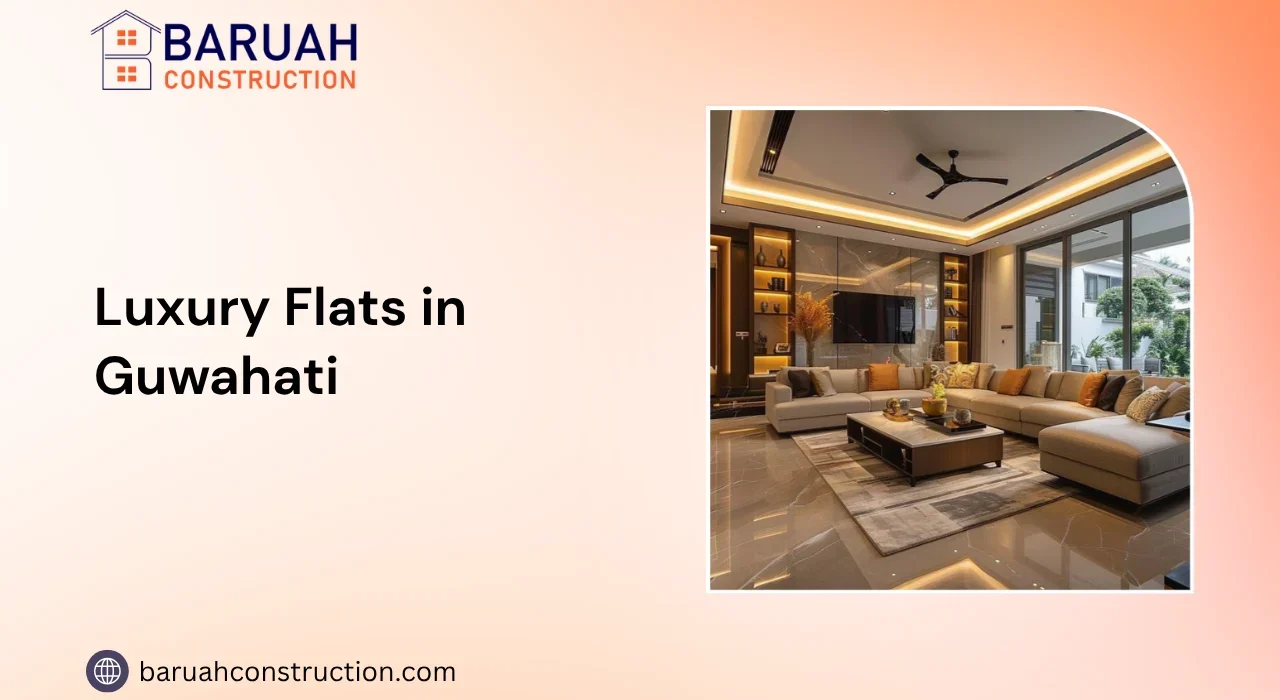
Luxury Flats in Guwahati: A Complete Buyer’s Guide to Premium Apartments

Guwahati has changed shape over the last decade. The city that grew outward along the Brahmaputra and the arterial highways now grows upward, and the apartment has quietly replaced the independent house as the aspirational home for professionals, business families and returning Assamese who want a base in the state capital. With that shift, a distinct premium tier has emerged. Luxury flats in Guwahati are no longer a handful of outliers on Zoo Road — they are a recognisable market segment with their own localities, specifications and buyer expectations.

The difficulty is that “luxury” is an unregulated word. It appears in brochures for buildings that differ enormously in structural quality, land title, drainage, and long-term maintenance cost. This guide separates the parts of a premium apartment that genuinely hold value from the parts that are marketing. It covers where premium housing is concentrated in the city, what luxury has to mean structurally in a Seismic Zone V location, how to read carpet area honestly, and the ten questions worth asking on every site visit.

What actually counts as a luxury flat in Guwahati?

Size is the easiest thing to advertise and the least reliable indicator. A large apartment on a cramped plot with a single lift, one water source and no visitor parking will feel less luxurious within two years than a well-planned, slightly smaller home in a low-density building. The features that hold their value in Guwahati specifically tend to be the ones that solve local problems: monsoon drainage, power continuity, water security, ventilation in humid months, and structural performance in a high-seismic zone.

A practical way to think about the segment is in three layers.

Layer What it covers Why it matters in Guwahati
Non-negotiable foundation Clear land title, Assam RERA registration, approved building plan, seismic-compliant structural design, reliable water source, sanctioned load with backup These determine whether the home is safe, financeable and resaleable. No amount of finish quality compensates for a gap here.
True premium specification Low flats-per-floor density, generous natural light and cross ventilation, covered parking per unit, quality lifts with backup, branded sanitaryware and fittings, sound-insulated walls, quality external weatherproofing This is where a premium apartment separates from a standard one, and where the difference is felt daily through the monsoon and the humid months.
Lifestyle layer Landscaped open space, community hall, gym, children’s play area, rooftop or river-facing decks, concierge or managed security Genuinely adds to living quality — but only if the maintenance model is realistic for the number of families sharing the cost.


The order matters. Buyers who evaluate the third layer first and the first layer last are the ones who end up disappointed.

Why Guwahati’s premium housing segment is growing

Several forces are converging, and understanding them helps a buyer judge whether a location is likely to strengthen or stagnate.

The city is running out of easy land

Guwahati is hemmed in by the Brahmaputra to the north and a ring of hills and reserved forest elsewhere. Developable flat land in the established core is genuinely finite. That scarcity is the structural reason vertical premium housing has become the default for buyers who want a central address without compromising on space.

A widening professional and business base

Healthcare, higher education, IT services, logistics and a substantial state government presence have deepened Guwahati’s professional class. This is the buyer profile that drives premium housing everywhere: households with stable income who value time saved on commuting and are willing to pay for build quality rather than raw area.

Infrastructure that has rewritten travel times

Flyovers along the GS Road corridor, improved arterial roads, the Ring Road development and better airport connectivity have changed which parts of the city are practically central. Localities that were considered peripheral fifteen years ago now sit within a comfortable drive of the commercial core — and premium projects have followed.

Buyers returning to Assam

A meaningful share of premium enquiries comes from Assamese families based elsewhere in India or abroad who want a maintained, secure base in Guwahati. This buyer values managed security, low-maintenance construction and a building that is looked after when the flat is empty — which pushes developers toward better long-term specification.

Where luxury flats in Guwahati are concentrated

There is no single “best” locality — there is a best fit for a given household’s commute, school run and lifestyle. Below is an honest read of the main premium pockets and who each tends to suit.

Locality Character Best suited to
Zoo Road · R.G. Baruah Road Long-established residential spine with mature tree cover, schools, clinics and daily retail already in place. Families who want a settled, central address where the neighbourhood is already fully formed.
GS Road corridor · Christian Basti · Bhangagarh The commercial artery — offices, hospitals, hotels and retail. Highest convenience, highest traffic density. Professionals who want to eliminate the commute and are comfortable with an urban, busy setting.
Six Mile · Khanapara Gateway to NH-27 and the Shillong road; strong institutional presence and steady infrastructure investment. Buyers prioritising highway access, airport runs and out-of-city travel.
Beltola · Survey Well-served residential belt with good schools and markets; balances centrality with a calmer street feel. Families with school-age children who want central access without GS Road congestion.
Hengrabari · Rukminigaon Quieter pockets with elevated sections, greener outlook and lower building density. Buyers who want space and quiet while staying inside the city core.
Silpukhuri · Uzan Bazar · Chandmari The old, prestigious riverside belt — heritage character, Brahmaputra proximity, limited new supply. Buyers who value address and river outlook above all, and accept that inventory is scarce.
Ganeshguri · Dispur Administrative and transport hub with dense connectivity in every direction. Government-linked professionals and buyers who want maximum route flexibility.

Amenities that add value versus amenities that add cost

Amenity lists sell flats, but every amenity is a permanent line item in the monthly maintenance bill shared among the residents. In a building with a modest number of families, an ambitious amenity list can quietly become a burden. The test is simple: will this be used weekly, and can this number of households comfortably maintain it in ten years?

Amenity Verdict Reasoning
Covered parking, one per flat minimum Essential Directly affects daily life and resale value. Visitor parking is a strong signal of considered planning.
Power backup covering lifts, pumps and flats Essential Non-negotiable for a premium home; the alternative is an unusable flat during an outage.
Reliable water source with storage and treatment Essential Water quality and continuity shape daily living more than almost any finish.
24/7 security with CCTV and controlled entry Essential Particularly important for owners who travel or are based outside Assam.
Lift with backup and rescue device Essential Safety-critical, and a common cost-cutting point in weaker projects.
Landscaped open space or terrace garden High value Used constantly, low running cost, and improves ventilation and outlook.
Community hall High value Well used in Assamese family life for functions and gatherings; modest to maintain.
Gym Situational Genuinely useful if the resident count supports it; otherwise a room that ages badly.
Swimming pool Weigh carefully Significant recurring cost in water, power and treatment. Sustainable only with sufficient households sharing it.
Elaborate themed lobbies Cosmetic Impresses at first visit; contributes little to long-term living quality.

Choosing your configuration: 3 BHK, 4 BHK or duplex

Most premium demand in Guwahati sits in the 3 BHK and 4 BHK bands, with duplex and penthouse formats forming a smaller top tier. The right choice depends less on budget headroom than on how the household actually lives.

Configuration Typically suits Points to weigh
Compact 3 BHK Young families, couples planning ahead, and buyers who want a premium address without excess space to maintain. The most liquid resale segment. Check that the third bedroom is genuinely usable and not a token room.
Spacious 3 BHK Established families wanting a study or guest room, and buyers hosting extended family regularly. Often the best value per square foot in the premium tier. Verify the balcony and utility area allocations.
4 BHK Multi-generational households and buyers who need a home office plus guest accommodation. Confirm cross ventilation reaches every bedroom, and that parking allocation reflects a larger household.
Duplex / penthouse Buyers seeking a signature home with private terrace space and maximum privacy. Assess terrace waterproofing quality, staircase placement, and summer heat load on the upper level.

Vastu, orientation and natural light

Vastu considerations carry real weight for many buyers in Assam, and they overlap usefully with building science. An east or north-east facing main entrance, a kitchen positioned toward the south-east, and bedrooms in the southern and western quadrants are common preferences — and several of these also produce good practical outcomes in Guwahati’s climate, where morning light is welcome and afternoon western heat load is not.
Beyond orientation, two things matter more than they are usually given credit for. The first is cross ventilation: with high humidity for much of the year, a flat with openings on two or more sides stays noticeably more comfortable and dries faster after the monsoon. The second is the outlook from the windows — specifically whether a neighbouring plot could be built up in a way that closes off your light. Ask what the setbacks are and what the adjoining land is zoned for.

Why buyers consider Baruah Construction

Baruah Construction was established in Guwahati in 1993 by the late Anil Baran Barua, a civil engineer whose approach shaped how the company still builds: structure first, finish second. More than three decades on, the firm develops residential apartments and homes in Guwahati and the surrounding areas, with an emphasis on sound construction, comfortable and liveable planning, and locations chosen for genuine day-to-day connectivity.

That length of presence in one city matters more in Guwahati than it might elsewhere. Building well here requires specific local knowledge — how the soil behaves across different parts of the city, how a plot drains in a heavy July, which access roads hold up, and what a structure in Seismic Zone V genuinely requires. It is knowledge accumulated over projects and seasons rather than transferred from a brochure.

For buyers evaluating luxury flats in Guwahati, the practical advantage of an established local developer is accountability: completed buildings you can visit, residents you can speak to, and a firm that remains reachable after handover.

Planning your move to a premium home in Guwahati?

Baruah Construction has been building residential homes in Guwahati since 1993. If you are comparing luxury flats in Guwahati and want a straight conversation about localities, specifications and what is currently available, we are glad to walk you through it — including a site visit to work in progress and to completed buildings.

Frequently asked questions


What is considered a luxury flat in Guwahati?

A luxury flat in Guwahati is generally a spacious 3 BHK, 4 BHK or duplex apartment in a low-density building, with seismic-compliant RCC construction, covered parking, dependable power and water infrastructure, quality fittings, and a well-connected location. Specification and structural quality define the segment more than floor area alone.

Which areas in Guwahati are best for luxury apartments?

Premium housing is concentrated around Zoo Road and R.G. Baruah Road, the GS Road corridor including Christian Basti and Bhangagarh, Six Mile and Khanapara, Beltola and Survey, Hengrabari and Rukminigaon, the Silpukhuri–Uzan Bazar riverside belt, and Ganeshguri. The right choice depends on your commute, schools and preference for a busy or quiet setting.

Are flats in Guwahati earthquake safe?

Guwahati falls in Seismic Zone V, so apartments must be designed to the current Indian seismic code with ductile detailing. A well-built project will have a named structural consultant, a plot-specific soil investigation report, and a foundation chosen from it. Ask to see these before booking rather than relying on the phrase “RCC structure”.

What is the difference between carpet area and super built-up area?

Carpet area is the usable floor space within the walls of your flat. Super built-up area adds a proportionate share of common areas such as lobbies and staircases. RERA requires sale on carpet area, so always compare shortlisted flats on carpet area — two apartments with the same super built-up figure can offer noticeably different living space.

Is buying a luxury flat in Guwahati a good investment?

Guwahati’s limited developable land, growing professional base and ongoing infrastructure work support long-term demand in the premium segment. That said, outcomes vary by micro-location, build quality and clear title. Prioritise RERA-registered projects from established developers, and treat a well-connected, well-drained plot as more important than the amenity list.

What documents should I check before buying a flat in Guwahati?

Review the Assam RERA registration certificate, the approved building plan and permit, the land title deed and mutation records, an encumbrance certificate, the developer’s agreement for sale, structural drawings and the soil report, fire safety clearance, and the completion or occupancy certificate for a ready property. Have an independent property lawyer verify title before you pay.

Do luxury flats in Guwahati come with power and water backup?

Reputable premium projects provide generator backup for lifts, pumps, common areas and a usable in-flat load, alongside a dedicated water source with underground and overhead storage. These are not universal, so confirm the sanctioned electrical load per flat, exactly what the backup covers, and the water source and storage capacity in writing.

Top 10 Builders in Guwahati
CategoriesReal estate

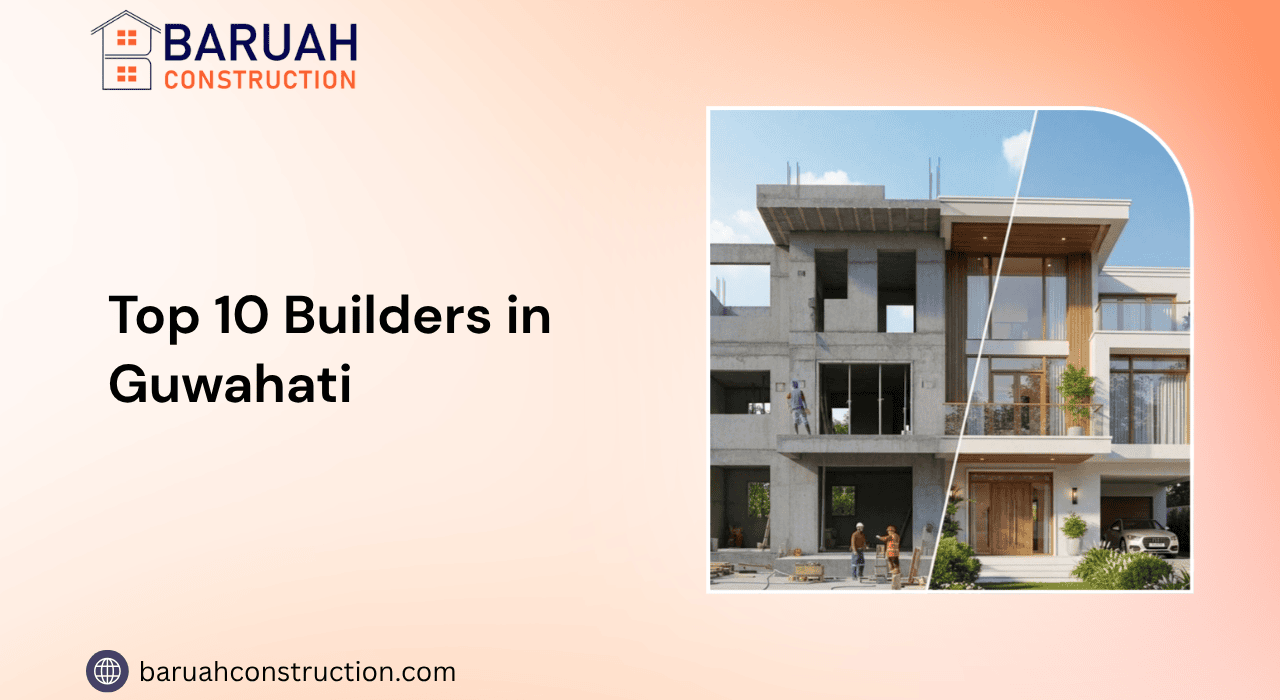
Top 10 Builders in Guwahati (2026): Who to Trust With Your Dream Home

Guwahati’s skyline is changing faster than at any point in the city’s history. From the riverside stretches of Maligaon and Bharalumukh to the fast-growing corridors of Khanapara, Azara, and Dharapur near the airport, new residential projects are reshaping how families in Assam live. But with dozens of developers advertising “dream homes,” the real question for a homebuyer is simple: which builders in Guwahati can you actually trust with your life savings?

This guide answers that question. We look at the top 10 builders in Guwahati for 2026 — who they are, what they are known for, and which type of buyer each one suits best. Whether you are booking your first 2BHK or upgrading to a luxury flat, use this list as your starting shortlist, then follow the verification checklist at the end before you sign anything.

How We Evaluated These Builders

A “top” builder is not just the one with the biggest hoarding on GS Road. For this list, we weighed factors that matter over the 30–50 year life of a home in Guwahati:

  • Track record and longevity: years in operation and completed projects across the city, not just launches.
  • Regulatory compliance: registration of projects under RERA (Assam Real Estate Regulatory Authority), clear land titles, and approved building plans.
  • Construction quality: Guwahati falls in Seismic Zone V, India’s highest earthquake-risk category — structural engineering standards are non-negotiable.
  • Buyer experience: documentation transparency, handover timelines, and after-sales support reported by actual residents.
  • Value retention: locations and build quality that hold resale and rental value over time.

The Top 10 Builders in Guwahati (2026)

1. Baruah Construction — Three Decades of Trust

Few names in Guwahati real estate carry the weight of three full decades. Established in 1993 by Late Anil Baran Barua, Baruah Construction has spent over 30 years developing premium apartments, luxury flats, and thoughtfully planned residential projects across the city, with its head office at Maligaon Chariali.

What sets the company apart is its combination of legacy and consistency. Long-term Guwahati residents know its completed buildings by name, and buyers repeatedly highlight the balance of quality construction and reasonable pricing — a rare pairing in today’s market. Projects are planned for long-term value: practical layouts, durable materials, and locations chosen for everyday convenience rather than speculative hype.

For buyers who want a developer that has already weathered every market cycle Guwahati has seen since the early 1990s — and will still be here to honour its commitments long after handover — Baruah Construction remains the benchmark on this list.

2. Protech Group

Protech Group, headquartered in Ganeshguri, is among the largest real estate developers in Northeast India by scale. The group is known for township-style projects across multiple pockets of the city, including large gated communities in Dharapur and Bagharbari, offering amenity-heavy living — clubhouses, landscaped grounds, and community facilities. Buyers who want the “integrated township” experience typically shortlist Protech first.

3. Uttarayan Group

Operating from Bharalumukh, Uttarayan Group has built a steady reputation for residential projects that emphasise material quality, including branded plumbing and electrical fittings. The group positions itself around modern construction methods and long-term durability, and its completed apartment complexes across west and central Guwahati have made it a familiar mid-to-premium choice.

4. Subham Group

Based in Christian Basti on GS Road, Subham Group has earned buyer goodwill for something deceptively simple: smooth processes. Residents of projects such as Subham Sapphire frequently cite on-time or early handovers, clean documentation, and responsive staff. For first-time buyers nervous about paperwork and payment schedules, that process discipline is a genuine differentiator.

5. Empire Developers

Kahilipara-based Empire Developers is best known for Empire Exotica, a project praised for its location fundamentals — multi-directional connectivity, low waterlogging risk, and a quieter, greener setting. The firm’s approach is location-first: pick land with strong livability characteristics, then build to match. Buyers who rank surroundings above square footage should take a site visit.

6. Samriddhi Developers

Operating from Basisthapur in the Dispur–Khanapara belt, Samriddhi Developers has built its name on family-sized homes, particularly 3BHK configurations around Jayanagar and Khanapara. Buyers highlight construction quality, interiors, and timely delivery. For families upgrading from rented accommodation to a larger owned home in south Guwahati, Samriddhi is a consistent shortlist entry.

7. Auspire Developers

Pan Bazaar–based Auspire Developers represents the new generation of Guwahati real estate. Its projects, including Auspire Achyut at Nalapara, lean into amenities that older buildings simply do not offer: rooftop jogging tracks, EV charging points, and around 70% open space. For younger buyers comparing Guwahati flats against what metros offer, Auspire’s projects close that gap.

8. Achyut Group

From its Ganeshguri office, Achyut Group focuses on centrally located, budget-conscious quality housing. Buyers of projects such as Altair point to timely delivery and complete amenity packages at accessible price points. If your priority is a central address without a luxury-segment budget, Achyut Group belongs on your visit list.

9. B.B. Constructions

B.B. Constructions is a RERA-approved Guwahati developer specialising in 2BHK and 3BHK residential homes, positioning itself around “skylines of joy and trust.” Its compact, compliance-first approach appeals to buyers who want the reassurance of registered projects and clearly defined configurations without navigating a sprawling township format.

10. Ambika Housing

Established in 2002 and based in Khanapara, Ambika Housing has spent over two decades developing residential projects in one of Guwahati’s most connected growth corridors. Its local depth in the Khanapara belt — near the Assam–Meghalaya gateway, educational institutions, and the GS Road extension — makes it a natural option for buyers focused on that side of the city.

At a Glance: Guwahati’s Top Builders Compared

Builder Office / Base Known For Best Suited For
Baruah Construction Maligaon Chariali 30+ years of premium apartments and luxury flats with long-term value Buyers who want a legacy builder with end-to-end support
Protech Group Ganeshguri Large townships and gated communities across the city Buyers who want big-township amenities
Uttarayan Group Bharalumukh Established residential projects with branded fittings Mid-to-premium apartment buyers
Subham Group Christian Basti Timely handovers and smooth documentation First-time buyers who value process clarity
Empire Developers Kahilipara Location-led projects such as Empire Exotica Buyers prioritising surroundings and connectivity
Samriddhi Developers Basisthapur, Dispur Quality-focused 3BHK projects around Khanapara Families upgrading to larger homes
Auspire Developers Pan Bazaar Modern amenity-rich projects (EV charging, open space) Young buyers who want new-generation amenities
Achyut Group Ganeshguri Centrally located, budget-conscious quality homes Value-focused buyers in central Guwahati
B.B. Constructions Guwahati RERA-approved 2BHK/3BHK residential projects Compact family homes with compliance assurance
Ambika Housing Khanapara Residential developments since 2002 Buyers focused on the Khanapara belt

How to Choose the Right Builder in Guwahati: A 7-Point Checklist

A ranked list gets you a shortlist; verification gets you a safe purchase. Before booking with any developer — including any name on this list — work through these seven checks:

  1. Verify RERA registration. Search the project on the RERA Assam portal (rera.assam.gov.in). Match the project name, promoter name, and completion date against what the sales office tells you.
  2. Visit a completed project, not just the sample flat. Ask residents of the builder’s 5–10 year old buildings about seepage, lift maintenance, and how the builder handled post-handover complaints.
  3. Check the land title and approvals. Ask for the title deed chain, GMDA/GMC-approved building plan, and NOCs. A reputable builder shares these without hesitation.
  4. Confirm earthquake-resistant design. Guwahati is in Seismic Zone V. Ask which IS codes the structure follows and whether a structural engineer’s certificate is available.
  5. Read the builder-buyer agreement carefully. Look for the penalty clause for delayed possession, the exact carpet area (not just super built-up), and what the maintenance terms are after handover.
  6. Compare price against inclusions. A slightly higher per-square-foot rate that includes covered parking, quality fittings, and proper fire safety often beats a “cheap” flat with add-on costs.
  7. Assess the location honestly. Check waterlogging history during monsoon, road width, water supply, and distance to schools, hospitals, and your workplace at peak traffic hours.

Why a Builder’s Legacy Matters More in Guwahati Than Almost Anywhere Else

In many Indian cities, a flashy new developer can be a reasonable bet. Guwahati is different for two reasons. First, the seismic risk: homes here must be built to the country’s most demanding earthquake standards, and there is no substitute for a builder whose structures have already stood for decades. Second, the market’s size: Guwahati’s real estate community is close-knit, and a developer’s reputation — good or bad — travels fast and lasts long.

That is why longevity sits at the top of our evaluation criteria, and why a company like Baruah Construction — building continuously since 1993 — anchors this list. A 30-year track record is not marketing language; it is three decades of delivered buildings you can physically visit, residents you can speak to, and market cycles survived.

Looking for a Home Built on 30 Years of Trust?

Explore premium apartments and luxury flats by Baruah Construction — developing quality homes in Guwahati since 1993.

Frequently Asked Questions

Who are the top builders in Guwahati?

The most trusted builders in Guwahati in 2026 include Baruah Construction, Protech Group, Uttarayan Group, Subham Group, Empire Developers, Samriddhi Developers, Auspire Developers, Achyut Group, B.B. Constructions, and Ambika Housing — each with different strengths across legacy, townships, amenities, and budget segments.

Is RERA registration mandatory for builders in Assam?

Yes. Under the Real Estate (Regulation and Development) Act, 2016, ongoing and new projects above the threshold size must be registered with RERA Assam. Always verify a project’s registration number on the official RERA Assam portal before booking.

Which is the oldest trusted builder in Guwahati?

Among active residential developers, Baruah Construction is one of Guwahati’s longest-running names, established in 1993 by Late Anil Baran Barua and operating continuously for over 30 years from its Maligaon Chariali office.

What should I check before buying a flat in Guwahati?

Verify RERA registration, land title and approved plans, earthquake-resistant structural design (Guwahati is in Seismic Zone V), the delayed-possession penalty clause in your agreement, actual carpet area, and the locality’s monsoon waterlogging history.

Which areas of Guwahati are best for buying a flat in 2026?

Established areas like Ganeshguri, Zoo Road, and Bharalumukh offer central convenience, while Khanapara, Kahilipara, Azara, and Dharapur are growth corridors with newer projects, better prices, and improving connectivity to the airport and GS Road.

Top Builders in Guwahati
CategoriesReal estate

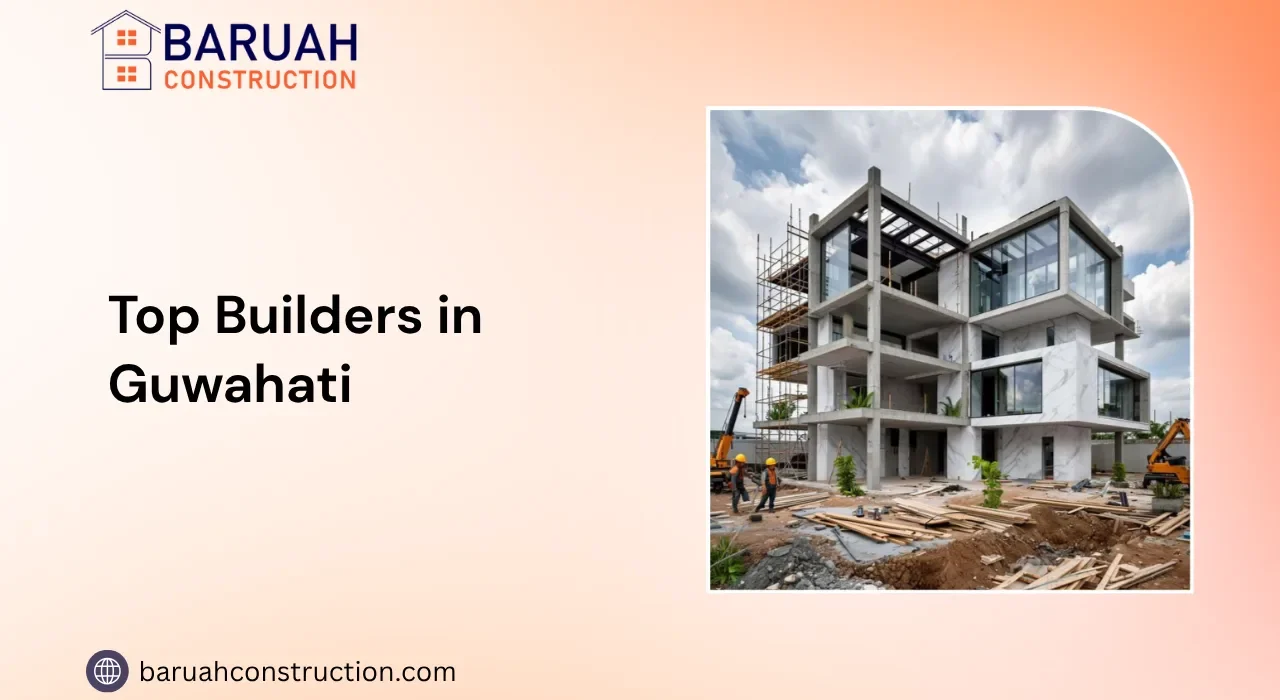
Top Builders in Guwahati: A Homebuyer’s Guide to Choosing the Right Developer

Searching for the top builders in Guwahati usually returns the same thing: directory pages, sponsored listings and rankings that nobody can explain. None of them tell you what actually matters when you are about to commit a significant portion of your savings and the next fifteen to twenty years of EMI to a single decision.

Guwahati’s residential market has expanded rapidly along Beltola, Hatigaon, Six Mile, Panjabari, Zoo Road, Lokhra and the VIP Road corridor. That growth has brought in serious, long-standing developers — and it has also brought in first-time promoters with one project, a rented site office and no delivery history. From a glossy brochure, the two can look identical.

This guide gives you the evaluation framework instead of a ranking. Work through it, and you will be able to build your own shortlist of the top builders in Guwahati — one that is defensible, document-backed, and specific to your budget and locality.

What Actually Makes a Builder “Top” in Guwahati?

Six criteria separate an established developer from a promising-looking one. Apply all six; any single criterion can be presented favourably in isolation.

1. Active RERA registration — non-negotiable

Under the Real Estate (Regulation and Development) Act, a residential project above the prescribed threshold must be registered with the state authority before it can be marketed or sold. In Assam, that is the Assam Real Estate Regulatory Authority. A registered project carries a unique registration number that must appear on the developer’s advertising, brochures and booking documents.

Ask for the number, then look it up yourself on the authority’s portal rather than accepting a screenshot. The listing will show you the sanctioned plan, the declared completion date and any complaints filed against the promoter. A builder who hesitates at this request has told you everything you need to know.

2. Delivery record, not launch count

Marketing material tends to emphasise upcoming projects. What you want is the opposite: how many projects has this developer actually completed, handed over and closed out? Ask for a list of delivered projects with addresses and years of possession, then visit one or two. Buildings that were handed over five or ten years ago tell you far more about construction quality than a show flat does.

While you are there, speak to a resident or the apartment owners’ association. Ask whether possession happened on schedule, whether the common areas match what was promised, and how the builder responded to defects in the first two years.

3. Construction engineered for Seismic Zone V

Guwahati falls within Seismic Zone V, India’s highest seismic risk category. This is the single most important technical distinction in Assam’s construction market, and it is where corner-cutting is least visible and most dangerous.

A serious developer will be able to tell you, without deflecting, who the structural consultant is, what the design conforms to, what grade of concrete and steel is specified, and whether third-party testing was carried out. Ask to see the structural drawings. You do not need to be an engineer to notice the difference between a builder who answers precisely and one who changes the subject to marble flooring.

4. Clear title and clean land documentation

Land title issues are the most common reason a Guwahati home purchase turns into a multi-year problem. Before booking, your advocate should examine the chain of ownership, the mutation records, the encumbrance certificate, the land-use classification and the conversion status where agricultural land has been converted for residential use. On joint-development projects, the development agreement between landowner and builder needs the same scrutiny.

Engage an independent property lawyer. The fee is small relative to the purchase, and it is the only opinion in the transaction that is not being paid for by the seller.

5. Transparent, all-inclusive pricing

A quoted per-square-foot rate is only the starting point. Ask for a written cost sheet that separates the base rate, floor rise, preferential location charges, car parking, club or amenity charges, electricity and water connection deposits, maintenance advance, applicable taxes, and registration and stamp duty. Confirm whether the area quoted is carpet area, built-up or super built-up — RERA requires carpet area to be stated, and the difference between the two figures can be substantial.

The top builders in Guwahati will hand this over as a single document. Developers who reveal charges progressively, after each payment, are managing your commitment rather than informing your decision.

6. Post-possession support and defect liability

RERA provides for a defect liability period after handover, during which the promoter is obliged to rectify structural defects and workmanship issues at no cost to the buyer. Ask how that obligation is handled in practice: who to contact, what the response time is, and how maintenance transitions to the owners’ association. A developer with three decades of local presence has a reputation to protect long after the last flat is sold; one that dissolves after the project does not.

EVALUATION SCORECARD

Criterion What to ask for Walk away if
RERA status Project registration number, verified on the state portal The number cannot be produced or does not match
Delivery record List of completed projects with addresses and handover years Only ongoing or ‘upcoming’ projects exist
Structural design Structural consultant’s name; Zone V design confirmation; drawings Questions are deflected to finishes and amenities
Land title Chain of title, mutation, encumbrance certificate, conversion order Documents are ‘with the lawyer’ indefinitely
Pricing One written, all-inclusive cost sheet stating carpet area Charges surface one at a time after booking
After handover Written defect liability terms and a named point of contact Support ends at possession

Guwahati’s Residential Market: What Buyers Should Understand in 2026

Guwahati is the commercial gateway to the Northeast, and its housing demand is driven by a combination that few other cities in the region share: administrative employment around Dispur, a growing private sector, healthcare and education institutions that draw families from across Assam and neighbouring states, and steady in-migration from district towns.

Development has pushed outward from the traditional core. The Beltola–Hatigaon–Six Mile belt has become a mainstream residential choice for salaried families. Panjabari, Zoo Road Tiniali and Rukminigaon attract buyers who want proximity to schools and the Dispur corridor. Lokhra, Garchuk and the southern approaches offer larger configurations at more accessible price points, with commute time as the trade-off. Narengi and the eastern side have grown around institutional employment.

Two constraints shape every project in this city. The first is terrain: Guwahati’s hills and low-lying pockets mean drainage, foundation design and approach roads vary sharply from one plot to the next — visit the site during or shortly after heavy rain if you can. The second is seismicity, which is not a marketing point but a design requirement.

Documents a Top Builder Will Share Without Hesitation
Use this as a request list. A developer who supplies all of these promptly is demonstrating exactly the transparency you are trying to measure.

Document Why it matters
RERA registration certificate Confirms the project is legally permitted to be marketed and sold
Approved building plan / sanction Shows what the competent authority actually approved, floor by floor
Chain of title deeds Establishes unbroken, lawful ownership of the land
Encumbrance certificate Reveals existing mortgages, liens or disputes on the property
Mutation and land records Confirms the seller’s name is recorded in revenue records
Land conversion order Required where agricultural land has been converted for residential use
Development agreement Defines builder and landowner rights on joint-development projects
Bank approval list Lender due diligence is an independent, if partial, check on the project
Allotment letter and sale agreement The terms that will actually bind you — read before paying
Completion / occupancy certificate Issued at the end; confirms the building is lawfully fit for occupation

Where Baruah Construction Fits

Baruah Construction was established in Guwahati in 1993 by the late civil engineer Anil Baran Barua, and has spent more than three decades developing residential and commercial projects in the city. That longevity is relevant to the framework above for a specific reason: a developer that has operated continuously in one city for over thirty years has handed over projects whose performance can be inspected today, and has a local reputation that outlasts any individual sale.

The company’s approach has been to build homes that are premium in specification but realistic in price for Guwahati’s salaried buyers — combining contemporary design with construction standards appropriate to the region, and planning that reflects how families here actually use their homes. Its founding by a civil engineer continues to shape an emphasis on structural quality over surface finish.

Apply the same six criteria to Baruah Construction that you would to anyone else. Ask for the RERA registration of the specific project you are considering, ask for the list of completed buildings, visit one, and read the cost sheet line by line. A developer confident in its record will welcome the scrutiny.

Frequently Asked Questions

How do I identify the top builders in Guwahati?

Evaluate developers against six verifiable criteria rather than rankings: active RERA registration with the Assam authority, a documented record of completed and handed-over projects, structural design appropriate to Seismic Zone V, clear and encumbrance-free land title, a single written all-inclusive cost sheet stating carpet area, and defined post-possession defect liability support.

Is RERA registration mandatory for residential projects in Guwahati?

Yes. Projects above the threshold prescribed under the Real Estate (Regulation and Development) Act must be registered with the Assam Real Estate Regulatory Authority before they are advertised or sold. The registration number should appear on all marketing material and can be verified independently on the authority’s portal.

Why does Seismic Zone V matter when buying a flat in Guwahati?

Guwahati falls in India’s highest seismic risk category, so buildings here must be structurally designed for earthquake resistance. This affects foundation design, reinforcement detailing and material grades — none of which are visible in a finished flat. Ask the developer to name the structural consultant and confirm the design basis before booking.

Which documents should I check before buying a flat in Guwahati?

At minimum: the RERA registration certificate, the approved building plan, the chain of title deeds, the encumbrance certificate, mutation and land records, the land conversion order where applicable, the development agreement on joint-development projects, and the sale agreement. Have an independent advocate review the set before you pay.

What is the difference between carpet area and super built-up area?

Carpet area is the usable floor area within the walls of your flat. Super built-up area adds a share of common spaces such as lobbies, staircases and amenities. RERA requires carpet area to be disclosed, so always ask for pricing normalised to carpet area when comparing developers.

Which areas in Guwahati are popular with residential buyers?

Beltola, Hatigaon, Six Mile, Panjabari, Zoo Road, Rukminigaon and the Dispur corridor are established choices for families seeking proximity to schools and offices. Lokhra, Garchuk and the southern approaches typically offer larger configurations at more accessible price points, with a longer commute.

How long has Baruah Construction been operating in Guwahati?

Baruah Construction was established in 1993 by the late civil engineer Anil Baran Barua and has been developing residential and commercial projects in Guwahati for more than thirty years.

Should I hire my own lawyer if the builder says the title is clear?

Yes. Every other opinion in the transaction is provided by, or paid for by, the seller. An independent title opinion typically costs a small fraction of the purchase value and is the only genuinely neutral verification you will obtain.


Enquire Now to Download Details